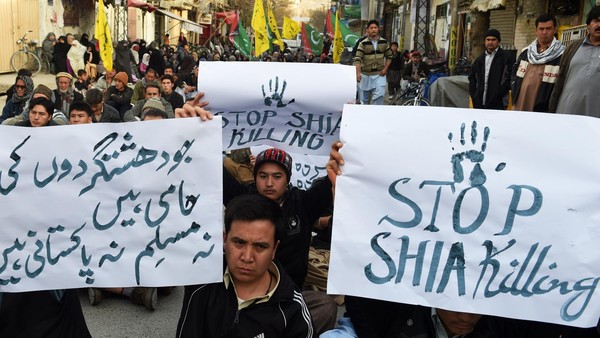
Leaders of Pakistan’s minority Shia Muslims on Monday urged their followers to take immediate steps to defend their places of worship after the bombing of a mosque that killed 64 people on Friday.
The attack on Shia worshippers in the city of Shikarpur in the southwestern province of Sindh prompted a wave of protests in parts of the country. The attack marks the latest setback for Nawaz Sharif, prime minister, in his efforts to improve security conditions.
“The government has proven to be utterly useless and the Shia community is very vulnerable. We need to raise a community of volunteers and scouts for security duties”, Hasan Zaffar, a prominent Shia cleric, told the Financial Times.
Amin Shaheedi, another prominent Shia cleric who has organised public protests to demand greater protection for the community, said: “The questions is, where was the police at the time of the attack? We have no protection. We have to protect ourselves.”
Responsibility for Friday’s bombing was claimed by Jundollah, a pro-ISIS terrorist group with a history of targeting Iran.
Western diplomats said the attack had exposed Mr Sharif to further criticism over the country’s security conditions, which have been in particular focus since a Taliban attack on a school in December in the northern city of Peshawar killed 150 people, mostly teenage students.
The incident has prompted criticism of Mr Sharif for his government’s failure to defend a recent constitutional amendment to establish courts led by military officers.
The proposed military courts have been criticised by human rights activists and lawyers, who say their creation will infringe the civil liberties of suspects brought to trial. But supporters of the decision argue that military courts are necessary in a country where judges have repeatedly failed to prosecute terror-related suspects.
“In spite of the parliamentary amendment to establish military courts, there is a lot of uncertainty over the future of this step,” said Mr Shaheedi.
In recent days, western diplomats have expressed concern over reports that Hafiz Muhammad Saeed, head of the banned deobandi militant group Lashkar-e-Taiba, has launched an ambulance service in the southern port city of Karachi. In 2008, Lashkar-e-Taiba gunmen killed 166 people in an attack on India’s commercial city of Mumbai.
“It’s clear, Pakistan has a history of moving two steps forward, one step backward,” said one. “This does not make the effort look credible.”
However, a Pakistani official said fresh moves were under way to tighten curbs against militant groups, including a decision that allows tax officials to investigate the spending of any Pakistani with a national identity card — the basic citizenship document. “From buying an airline ticket to buying a car, we will know who is spending what and where. This will tighten space for suspicious expenditure,” he said.
/129